
31 October 2026
How to Plan Your Day: A Five-Minute Morning Habit at Your Desk
Planning your day starts with five quiet minutes, not a long to-do list. How we set up the day on a small desk calendar and close it in the evening.
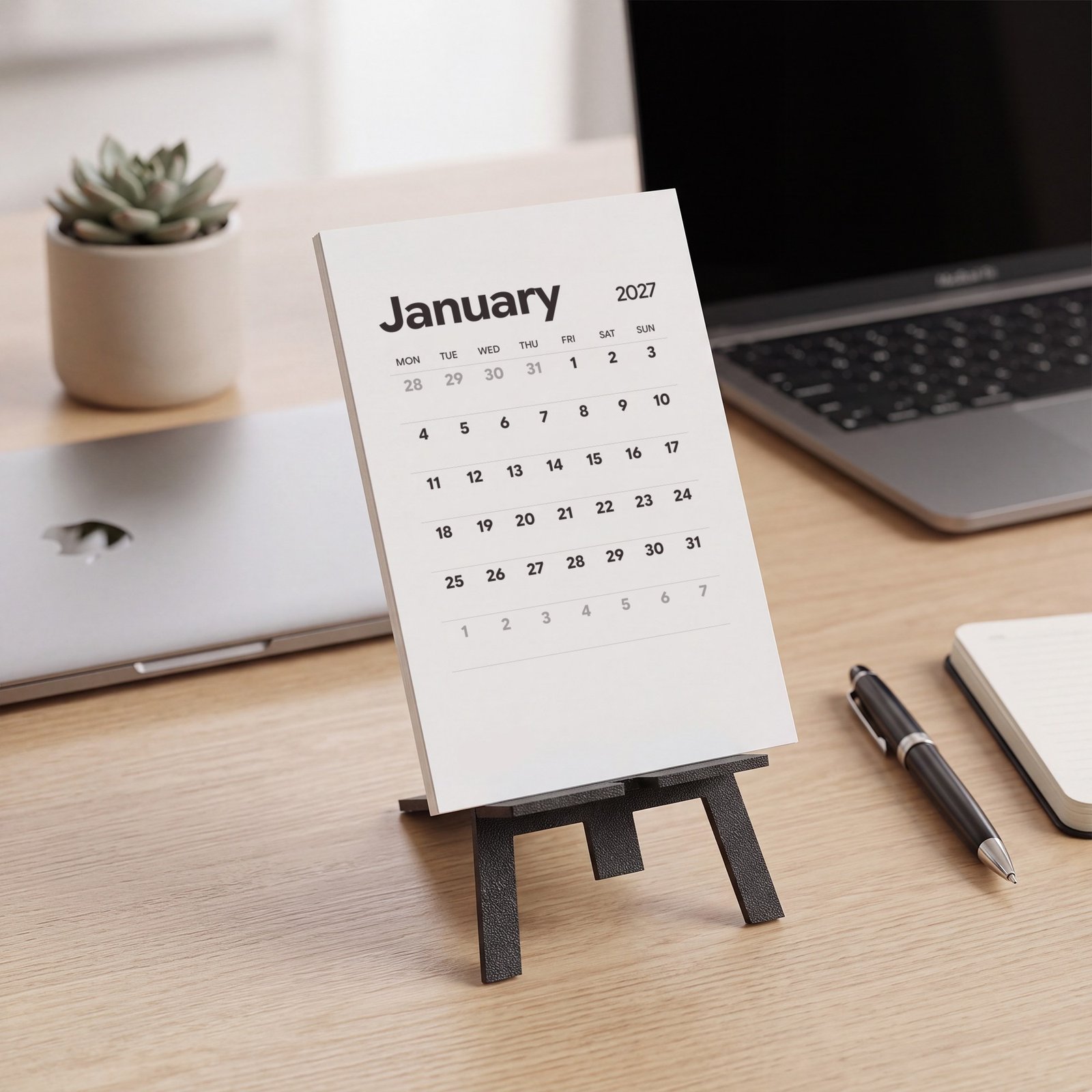
Ask people how they plan their day and most will describe a long to-do list: fifteen items in the morning, six crossed off by evening, nine carried over to tomorrow. Three days later it's a list of things put off, buried somewhere on the desk.
We'd suggest something smaller: five minutes in the morning, two in the evening, and a small calendar right in front of you on the desk.
Why the long list doesn't work
The longer a list gets, the more every item looks the same size. When "sort out the tax return" sits right above "buy pens," most of us pick the easy one. You get plenty done, and the real job doesn't move.
A list also has no idea what your day looks like. If Tuesday holds a three-hour meeting, fifteen tasks for Tuesday never stood a chance. You need to see how much free time a day really leaves, and that means looking at the calendar first.
The third problem is sneakier. A long list that never gets finished leaves a small sense of failure every evening, which makes it harder to open the next morning. A short plan gets finished most days, and that feeling carries over.
Five minutes in the morning
Before the laptop, before email. While the coffee brews is fine.
Look at the week first
This is where a desk calendar's monthly view earns its place. Before today's box, glance at the rest of the week. Something due Thursday? Off on Friday? Someone coming to stay? Today's work is often groundwork for later in the week, and with the month on one sheet, you see it at a glance.
One thing for today
Then ask yourself one question: if only one thing gets finished today, which should it be? Write it in today's box. One word, two at most: "Proposal," "Lease," "Chapter 3."
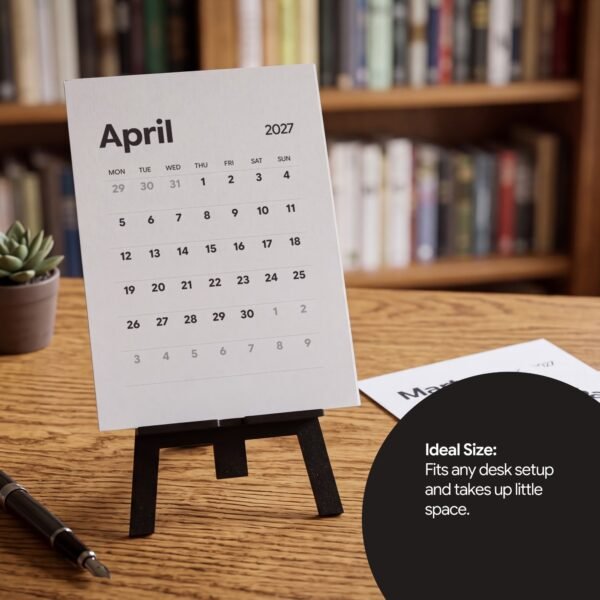
On an A6 monthly calendar (10.5 × 14.8 cm, about 4.1 × 5.8 in), the day boxes are small. We see that as a limit, not a flaw: a sentence won't fit, so you have to get clear about the task. At month's end, those one-word headings sum up the month.
A card for everything else
The other tasks don't vanish. Write them on a scrap of paper, three at most, keep it by the keyboard and throw it away at the end of the day. The word on the calendar stays; the card is just the day's rough draft.
An example of a daily plan
Picture an ordinary Tuesday. It's 8:30 and the coffee is brewing. On the calendar, Thursday's box says "Presentation," today's is empty, and Friday's corner says "Parents."
Today's one thing is obvious: the presentation draft has to be done before Thursday. You write "Draft" in the box and put three items on the card: "Call the bank," "Pay the phone bill," "Order cake for Friday." The 11 o'clock meeting is already on the calendar.
The afternoon runs long and the bank call slips. In the evening, "Draft" gets its check mark. The bank call goes on tomorrow's card, not in tomorrow's box, because tomorrow's one thing is already settled. The card goes, the screen goes dark. Seven minutes, all told.
Why the calendar belongs next to your screen
Writing the task down in the morning is easy; remembering it at three in the afternoon is harder. An app stays invisible until you open it. A calendar on your desk is there every time you look up.
Placement matters. The lower corner of the monitor, a little below eye level, works well; a calendar pushed in among the books turns into decoration within a week. Our own desk calendar stand is two pieces that slot together with no screws or glue, so it's easy to move or turn toward you.
When the day falls apart
Some days won't go to plan: an urgent call, an early pickup from school, a meeting that won't end. Don't erase the word. In the evening, look at it and decide: does it move to tomorrow, or has it stopped mattering?
If it moves, write it in tomorrow's box and put a small arrow beside today's word. If it no longer matters, strike it through with a single line. Either way, the plan doesn't quietly go stale. That's the real job of daily planning: not getting everything done, but knowing what didn't.
A two-minute close in the evening
Before you shut down, come back to the calendar. Check the corner if the day's one thing is done, throw away the card, and if tomorrow's box is empty but something's on your mind, write it in now.
Those two minutes shorten tomorrow's five. And leaving tomorrow's work on paper means you don't carry it to the dinner table and into bed.
Making the habit stick
A new habit sticks more easily when it rides on one you already have: the first coffee, switching on the computer, closing the laptop at night. Put your glance at the calendar right after one of them.
You'll skip a few days in the first week, and the empty boxes will show it. That's useful: you can't fix what you can't see. At the end of the month, count the filled boxes and aim for one more next month. Not a perfect month, just a fuller one.
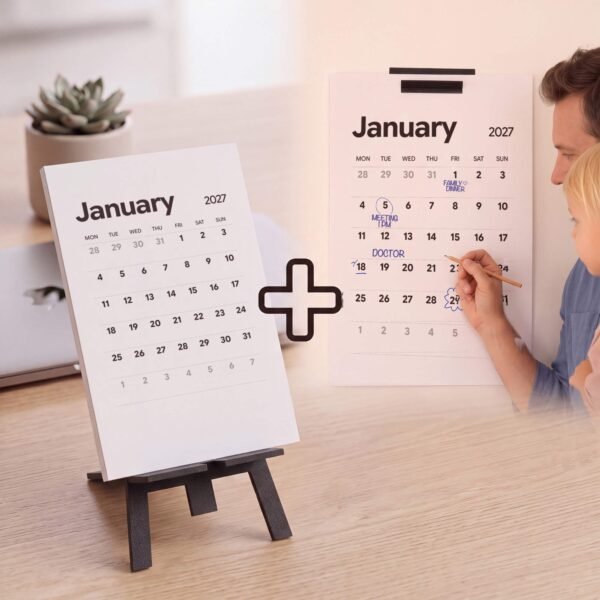
To tie your days into the bigger picture, our post on monthly planning shows how to set up the whole month on the wall. If you need one for your desk, our 2027 desk calendar comes with A6 sheets and its own stand; every option is on our desk calendars page.
To set up the system in this post: Masa Takvimleri
Products in this post
-
 8% Off
Featured
Desk Calendar
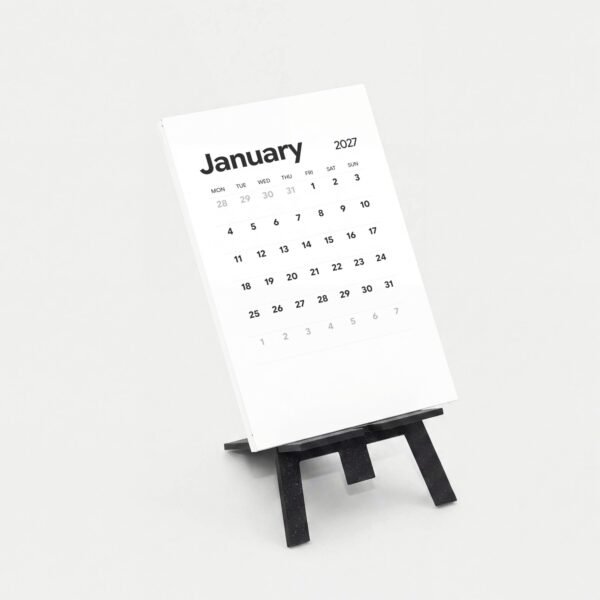
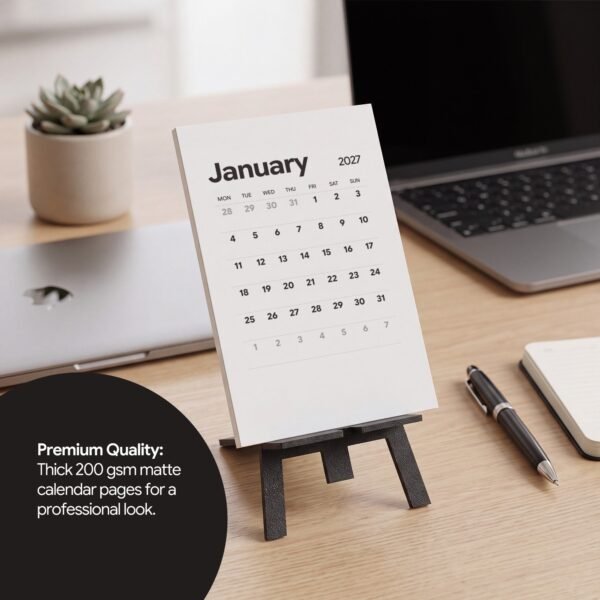
PlanCORE™ Desk Calendar Set 2027
Minimalist Desk Calendar
- A6
- 6 languages
Original price was: €12,90.€11,90Current price is: €11,90. Choose language This product has multiple variants. The options may be chosen on the product page -
 20% Off
Refill Sheets
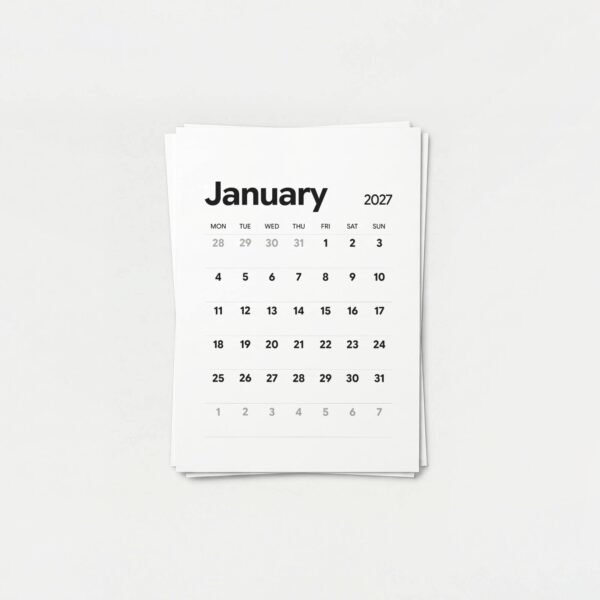
PlanCORE™ Desk Calendar Refill 2027
Desk Calendar Refill Sheets
- A6
- 6 languages
Original price was: €9,90.€7,90Current price is: €7,90. Choose language This product has multiple variants. The options may be chosen on the product page -
 Featured
Wall Calendar
PlanCORE™ Wall and Desk Calendar 2027
Minimalist Calendar Set
- A3 · A4
- 6 languages
From €19,90 Options This product has multiple variants. The options may be chosen on the product page